Extremism in Takfeer – Principle Six

Study Notes
Abu Saifillah Abdul Qadir

PRINCIPLE SIX

We judge the rulers only by that which is apparent, and leave that which is not apparent to Allaah for indeed He alone knows the inner most affairs of all people.

This principle dictates that we cannot venture into the leaders hearts, and speak of those things which we have no apparent evidence for, so we would indeed be sinning if we spoke of his actions which pertain to his heart, i.e love, hope, fear, etc. we can only speak of the apparent effects of this.[1]

EVIDENCE FOR PRINCIPLE SIX

 Imaam At-Tahaawi (rahimahullaah) states in his famous book of Aqeedatut-Tahaawiyyah:

 “And we do not testify against them with kufr nor with shirk nor hypocrisy just so long as these are not apparent from them and we leave their unapparent affairs to Allaah.”[2]

 So in explanation of this Ibn Abi Izza said:

“This is because we have been ordered to judge that which is apparent and we have been prohibited from suspicion, and following that which we have no knowledge of, as Allaah said:

يَا أَيُّهَا الَّذِينَ آمَنُوا لَا يَسْخَرْ قَومٌ مِّن قَوْمٍ عَسَى أَن يَكُونُوا خَيْرًا مِّنْهُمْ

“O you who believe!  Let not a group scoff at another group, it may be that the latter are better than the former..” [Al-Hujuraat (49):11]

And Allaah also said:

يَا أَيُّهَا الَّذِينَ آمَنُوا اجْتَنِبُوا كَثِيراً مِّنَ الظَّنِّ إِنَّ بَعْضَ الظَّنِّ إِثْمٌ

“O you who believe!  Avoid much suspicions, indeed some suspicions are sins..” [Al-Hujuraat (49):12]

And Allaah said:

وَلاَ تَقْفُ مَا لَيْسَ لَكَ بِهِ عِلْمٌ إِنَّ السَّمْعَ وَالْبَصَرَ وَالْفُؤَادَ كُلُّ أُولـئِكَ كَانَ عَنْهُ مَسْؤُولاً

“And follow not (O man i.e., say not, or do not or witness not, etc.) that of which you have no knowledge (e.g. one’s saying: “I have seen,” while in fact he has not seen, or “I have heard,” while he has not heard).  Verily!  The hearing, and the sight, and the heart, of each of those you will be questioned (by Allaah).” [Al-Israa’ (17):36]

Imaam At-Tahaawi (rahimahullaah) also said:

“And we do not pronounce takfeer upon anyone from the people of Qibla by these sins, as long as they do not make them halaal, and we do not say that one who sins his imaan is not harmed.” [3]

(This is also a refutation of the Murjia whom we are accused of being)

 What is meant by “people of Qibla” in his above saying is: We name our people of the Qibla Muslims, Mu’mins [as long as they hold up to what the Prophet (sallallaahu alayhi wa sallam) came with knowingly, and that they believe in everything he said, and informed of].  The shaykh (rahimahullaah) is pointing out by this statement a refutation to the Khawaarij who pronounce takfeer on the one who does sin.[4]


[1] Every action does not necessarily dictate the action of the heart. i.e. a father smacking his child (an action of the limbs) does not mean he hates ( an action of the heart) his child.

[2] Sharhul Aqeedatut-Tahaawiyyah p-378 by Ibn Abi Izza al Hanafi checked by Shaykh Naasirud-Deen Al-Albanee

[3] Sharhul Aqeedatut-Tahaawiyyah p-316 by Ibn Abi Izza al Hanafi

[4] Sharhul Aqeedatut-Tahaawiyyah p-316 by Ibn Abi Izza al Hanafi

Extremism in Takfeer – Principle Five

Study Notes
Abu Saifillah Abdul Qadir

PRINCIPLE FIVE

That a Muslim is not pronounced a disbeliever (kaafir) by what he says or does or believes until the evidence is established against him(1), and his doubts disappear and all the conditions of takfeer apply and all the conditions that negate takfeer are negated.

So this principle dictates that we submit to the withholding of pronouncing takfeer upon the one who rejects, denies, or opposes something from the religion that is known by necessity up until the proof is established against him.

EVIDENCE FOR PRINCIPLE FIVE

The evidences for this principle are too many to mention however of the evidences that prove this sixth principle is the saying of Allaah:

وَمَا كُنَّا مُعَذِّبِينَ حَتَّى نَبْعَثَ رَسُولاً
“And We never punish until We have sent a Messenger (to give warning).”
[Al-Isra (17):15]

ثُمَّ إِنَّ رَبَّكَ لِلَّذِينَ عَمِلُواْ السُّوءَ بِجَهَالَةٍ ثُمَّ تَابُواْ مِن بَعْدِ ذَلِكَ وَأَصْلَحُواْ إِنَّ رَبَّكَ مِن بَعْدِهَا لَغَفُورٌ رَّحِيمٌ
“Then, verily! Your Lord for those who do evil (commit sins and are disobedient to Allaah) in ignorance and afterward repent and do righteous deeds, verily, your Lord thereafter, (to such) is Oft-Forgiving, Most Merciful.”
[A-Nahl (16):119]

قُلِ اللّهِ شَهِيدٌ بِيْنِي وَبَيْنَكُمْ وَأُوحِيَ إِلَيَّ هَذَا الْقُرْآنُ لأُنذِرَكُم بِهِ وَمَن بَلَغَ
“Say (O Muhammad (sallallaahu alayhi wa sallam): “What thing is the most great in witness?” Say: “Allaah (the Most Great!) is Witness between me and you; this Qur’aan has been revealed to me that I may therewith warn you and whomsoever it may reach.”
[Al-An’aam (6):19]

Shaykhul Islaam Ibn Taymiyyah (rahimahullaah) said:

Also the women who had continual bleeding and said: “I have continual heavy bleeding which prevents me from prayer and fasting.” So he (sallallaahu alayhi wa sallam) ordered her to pray during the period of continual bleeding and did not order her to make up for the prayers she had missed.” [Al-Udar bi Jahal of Shaykh Ahmad Fareed]

Also when the messenger (sallallaahu alayhi wa sallam) made hijrah to Medina the prayer was increased for the residents but those who were far from him, such as those in Mecca and Abyssinia, used to pray two rak`at and he did not order them to repeat their prayers.” [Al-Udar bi Jahal of Shaykh Ahmad Fareed]

Further evidence: “When Mu’aawiyah ibn Al-Hakam as-Sulamee (radiyallaahu anhu) spoke in prayer after the forbiddance, being ignorant of it. So he (sallallaahu alayhi wa sallam) said “this prayer of ours – nothing from the speech of humans”, and he did not order him to repeat the prayer.” [Majmoo Al Fataawa 22/41-42]

Imaam Al Qurtubee (rahimahullaah) said:

So just as the kaafir does not become a believer except by choosing imaan over kufr, then likewise a believer does not become a kaafir through something by which he did not intend kufr nor choose it. There is ijmaa upon this.” [Tafseer Ul-Qurtabi 7/6128]

Ibn Al-Qayyim (rahimahullaah) said:

“..As for the kufr of ignorance when the proof has not been established and of one who has not been able to reach the truth, then Allaah has denied punishment for such a one until the proof brought by the messenger is established.”

Imaam Ash-Showkaani (rahimahullaah) said:

“..Whoever prostrates to other than Allaah out of ignorance, he does not become a disbeliever.” [Naylul Awtaar 6/210]

And there are many more statements from our salaf and the scholars of Ahla Sunnah wal Jammat establishing that proof has to be established upon a believer before pronouncing takfeer upon him. I refer the noble reader to the book Al-udhar-bil-jahal` by Shaykh Ahmad Fareed.

_____________________

1.That his kufr of action and saying is connected to his belief and heart.

Extremism in Takfeer – Principle Four

Study Notes
Abu Saifillah Abdul Qadir

PRINCIPLE FOUR

That a Muslim is not pronounced a kaafir (disbeliever) except if he rejects something known from the religion by necessity, or if he denies it out of arrogance or pride, or if he opposes it whilst not believing in it.

This principle dictates the following:

A) One who does not judge by what Allaah has revealed out of rejection that it is an obligation, then such an individual is a disbeliever (kaafir) with major kufr.

B) One who does not adhere to judging by what Allaah has revealed out of arrogance or pride then such an individual is a disbeliever, with major kufr.

C) One who opposes judging by what Allaah has revealed whilst not believing in it, rejecting it as an obligation then such an individual is a disbeliever, with major kufr.

D) One who remains in doubt about the obligation of judging by what Allaah has revealed then such an individual is a disbeliever. [Doubt here can be of two types either in its obligation or in its interpretation. What is referred to here is doubt in its obligation.]

However if such an individual accepts the obligation to judge by what Allaah has revealed and believes that it is most supreme over any other law and system, but he left judging by it for some weakness or following of desires or sin or out of fear or hope then his original imaan does not disappear such an individual is not a disbeliever (kaafir), with major kufr. Rather he is a disbeliever with minor kufr and he is still within the fold of Islam.

This is just a brief explanation of what this principle dictates, a further and clearer
explanation can be found in chapter four.

EVIDENCE FOR PRINCIPLE FOUR

One of the best evidences in my view, in order to show you principle four in implementation is the following:

Shaykhul-Islaam Ibn Taymiyyah (rahimahullaah) said:

“And this was the state of An-Najaashi, (ruler of Habashi). Even though he was the king of the Christians his people did not follow him in accepting Islam. Rather only a number of them accepted Islam with him, and for this, when he died there was no one to pray over him. So the Prophet (sallallaahu alayhi wa sallam) prayed over him in Medina. He went out with the Muslims to the musalla and arranged them in rows and prayed over him and informed them of the death the day he died. He (sallallaahu alayhi wa sallam) said:Verily a righteous brother of yours from the people of Al-Habashi has died.”
And many of the outwardly manifested pillars of Islam or most of them, he did not establish upon his people because of his weakness in that. So he did not do hijrah, nor did he fight jihaad, nor did he perform the hajj. It has even been narrated that he did not even establish his five daily prayers, and he did not fast in Ramadaan, neither did he pay the legislated Zakaat (all of these are obligatory actions), because that would have made apparent to his people and they would have disapproved of it opposing him, and it was not possible for him to differ with them. We know definitely that it was not possible for him to judge between his people with the Qur’aan even though Allaah had made it an obligation upon the Prophet (sallallaahu alayhi wa sallam) in Medina, that if the people of the book came to him, then he should not judge between them except with what Allaah has revealed to him..” [Minhaaj as Sunnah 5/112-113]

From this statement of Shaykhul Islam Ibnu Taymiyyah we can clearly understand that An-Najaashi did not rule by what Allaah had revealed and that if one does not deny, reject, opposes or makes halaal what Allaah made haraam or vice versa, with belief that it is an obligation to judge by what Allaah has revealed then such an individual is a believer even if he does not judge by what Allaah has revealed, out of weakness, fear, hope, etc. This is because the Messenger (sallallaahu alayhi wa sallam) said: “…your brother in Habashi has died..” then he prayed over him, which he would not say or do if An-Najashi was a kaafir.

We also find in Saheeh Al-Bukhaaree, a narration about Haatib ibn Baltah, where he informed the Quraish to be aware that the Prophet (sallallaahu alayhi wa sallam) was going to attack Mecca. When Allaah gave this information to the Prophet (sallallaahu alayhi wa sallam) he summoned Haatib, and ‘Umar (radiyallaahu anhumaa).

Umar said:

“Let me take off the head of this munafiq, O Messenger of Allaah.”

The messenger refused and asked him (Haatib):

“Why did you do this?”

He replied:

“O Messenger of Allaah, Verily I did not do this out of disbelief (Kufr) I believe Allaah is going to aid you. All the companions here have relatives to take care of their families in Mecca but I do not. So I thought by giving them this information they will be lenient towards my family there.” 

So the Messenger (sallallaahu alayhi wa sallam) said:

“Leave him for perhaps Allaah has turned to the people who partook in al Badr and said do what you will, I have forgiven you.”
[Al-Bukhaaree]

So ‘Umar (radiyallaahu anhu) believed this action to be hypocrisy, but the Messenger (sallallaahu alayhi wa sallam) asked Haatib “Why did you do this?” He (sallallaahu alayhi wa sallam) established the proof on him first, and then let him be after concluding it was of the lesser kufr and not the major kufr.

Further evidence is in the saying of Imaam At-Tahaawi (rahimahullaah):

And the slave is not taken out of the fold of imaan except by denying that which entered him into it.” [Aqeedatut-Taahawiyyah p-331]

The Shaykh is pointing out a refutation to the Khawaarij and Mu’tazilah, where they say a person leaves imaan by doing major sins [other than shirk]. And this clearly shows that a mere action alone cannot take one out of the fold of Islam until the proof is established that this action displayed is what the belief of the person is. Just as when one becomes a Muslim the action of the shahadah alone is not acceptable until it is clear the person understands and believes what he is entering into.

Extremism in Takfeer – Principle Three

Study Notes
Abu Saifillah Abdul Qadir

PRINCIPLE THREE

Kufr is of two types;

  1. Kufr in belief, that takes one out of the fold of Islam. It is also referred to as major kufr.
  2. Kufr in action, that does not take one out of the fold of Islam on its own except, if after the establishment of the proof, his actions portray manifest denial, rejection, arrogance, etc. It is also referred to as minor kufr.

So this principle necessitates the establishment, of whether the judgement by other than what Allaah has revealed, falls under the type of kufr in belief which is rejection, denial, or making it permissible or even believing that one has a choice in the matter. Or does it fall under the type of kufr in action that does not make you a kaafir. Therefore if the scholars of Islam judge that the kufr in a particular instance was kufr in action then we would have indeed lied against Allaah if we were to make them unbelievers.

EVIDENCE FOR PRINCIPLE THREE

If kufr was not of two types then how would we understand the hadith narrated by Abdullah ibn Mas’ood (radiyallaahu anhu) that the Messenger of Allaah (sallallaahu alayhi wa sallam) said:

“Abusing a Muslim is fisq (sin) and fighting him is kufr.”

[Agreed upon]

So is this fighting kufr in belief or kufr in action, bearing in mind that if it is kufr in belief, then the person who does this act becomes a disbeliever (kaafir)? The answer is clearly that it is kufr in action, the minor kufr which does not remove one from the fold of Islam, and this is established from Allaah’s statement;

“And if two parties from amongst the believers fight then make peace between them, and if one transgresses then fight you all the one which transgresses till it complies with the command of Allaah.”

[Al-Hujuraat (49):9]

So we find Allaah describing those Muslims that fight each other as believers.  Therefore fighting amongst believers is kufr in action or minor kufr and cannot be kufr in belief or major kufr. Each and every verse in the Qur’aan and the hadith that mentions kufr must be verified to find out what type of kufr it is. This is a task for the scholars alone and not the common people. Other examples of such cases can be found in the following authentic ahadeeth, where all the examples are of kufr in action or minor kufr.

“Two things if done are kufr, abusing of genealogies and wailing over the dead.”

[Saheeh Muslim]

“Arguing over the Qur’aan is kufr.”

“Speaking about Allaah’s favours is giving thanks and leaving that is kufr.”

“Do not return to being kaafir after me by some of you striking the necks of others (fighting).”

[Al-Bukhaaree]

“Whoever goes into his women from behind (anus) has indeed done kufr.”

And also the statement of Allaah:

“Whoever does not judge by what Allaah has revealed such are the disbelievers.”

[Al-Maa’idah (5):44]

Like this there are many more verses and ahadeeth, like the ones mentioned in chapter one that need to be explained by tafseer or hadeeth using principles of the Shari’ah in order to arrive at the correct ruling. A work only befitting for scholars. So this is where many of the Muslims become confused and are lead astray. They try to implement the verses of Surah Al-Maa’idah and other texts, as they are, apparently, without applying the principle that the kufr mentioned in the text can be one of two types.

Extremism in Takfeer – Principle Two

Study Notes
Abu Saifillah Abdul Qadir

PRINCIPLE TWO

The issue of Takfeer is grave, so one should be cautious in this matter and not rush to pronounce the Muslim leaders as kaafirs. The issue of takfeer should be taken very seriously and not bear on emotional happenings. There is a great possibility the person being labelled may not deserve it.

EVIDENCE FOR PRINCIPLE TWO

Firstly to show that there is a possibility that a person may show apparent disbelief but really his heart is full of belief, and it would be very dangerous for one to pronounce takfeer upon him without establishing what he truly believes first. Allaah says:

“Whoever disbelieved in Allaah after his belief, except him who is forced thereto, whilst his heart is at rest with faith (imaan) but such as open their hearts to disbelief – on them is wrath from Allaah and theirs will be a great torment.”

[An-Nahl (16):106]

The statement of the Messenger of Allaah (sallallaahu alayhi wa sallam):

“He who says to his brother: O disbeliever, then it returns upon one of them.”

[Bukhaaree, Muslim and Muwatta Imaam Maalik]

Also his (sallallaahu alayhi wa sallam) saying:

“And he who accuses a believer of kufr then it is like killing him.”

[Bukhaaree]

Also his (sallallaahu alayhi wa sallam) saying:

“…..Except if you see clear open kufr, given to you as evidence from Allaah..”

[Muslim, An-Nasaa’ee]

And his (sallallaahu alayhi wa sallam) saying:

“if a man says the people are destroyed, then he has destroyed them…”

[Muslim]

Also his (sallallaahu alayhi wa sallam) saying:

“Everything of a Muslim is sacred to a Muslim: his property, honour, and blood. It is enough evil for a man to despise his Muslim brother.”

[Aboo Daawood: 4868]

And his (sallallaahu alayhi wa sallam) saying:

“I warn you of suspicion, for indeed suspicion is the most lying speech.”

[Agreed upon]

And his (sallallaahu alayhi wa sallam) saying:

“Whoever accuses a man of kufr, or says enemy of Allaah, and he is not that, then it returns upon him.”

[Agreed upon]

And his (sallallaahu alayhi wa sallam) saying:

“If anyone guards a believer from a hypocrite, Allaah will send an angel who will guard his flesh on the day of judgment from the fire of Jahannam; but if anyone attacks a Muslim, saying something by which he wishes to disgrace him he will be restrained by Allaah on the bridge over Jahannam till he is accounted for what he said.”

[Aboo Daawood: 4865]

And the saying of Shaykhul-Islaam Ibnu Taymiyyah (rahimahullaah):

“I am one of the most severe in forbidding that a person in particular be labelled with disbelief, or sin or disobedience until it is known that the proof has been established upon him….”

[Al Fatawa 3/229 and see Al Fatawa 3/282, 283 (a principle with Ahlus-Sunnah)]

Extremism in Takfeer – Principle One

Study Notes
Abu Saifillah Abdul Qadir

PRINCIPLE ONE

This principle is to stand out for justice and not allowing one’s emotions, desires, hatred, and ignorance dictate the position one is going to hold regarding the issue of takfeer.

This principle dictates not allowing the poor situation of the Muslims around the world i.e., Palestine, Kashmir, Bosnia etc. dictate one’s position that is held, and to not allow one’s hatred for a people i.e. leaders of Muslim countries, make him unjust to them, even though we see from them manifest dhulm, fisq, and kufr.

EVIDENCE FOR PRINCIPLE ONE

The evidences for this principle are many. Of them is the statement of Allaah:

“And if you judge between the people, then judge with justice.” 

[An-Nisaa’ (4):58]

The verse orders fairness, justice, and equality with all people when making judgement between them, and not being just with some people and not with others.

Indeed Allaah ordered his messenger with a straightforward command to be just by His saying:

“…And I have been ordered to be just between you all.”

[Ash-Shoora (15):42]

Also Allaah has ordered the believers to be just by His saying:

“..Be just for it is closer to taqwa…”

[Al-Maa’idah (5):8]

And Allaah, the Most High also states:

“Verily Allaah orders with justice and the doing of good and kindness to relatives”

[An-Nahl (16):90]

Allaah has specifically ordered all the believers to be just in their speech by His saying;

“..And if you speak then be just even if it be with your own relatives”

[Al-An’aam (6):152]

Ibn Katheer said in the tafseer of this verse:

“Allaah orders to be just in actions and sayings with our near ones and our far ones and Allaah orders everyone to be just at all times and in all situations.”

So His order to be just in our actions is in His saying:

“Oh you who believe stand out firmly for justice as witnesses to Allaah even if it is against yourselves or your parents, or your kin..”

[An-Nisaa’ (4):135]

And Allaah has warned us not to be unjust, ever, in His statement:

“…So do not follow the desires lest you avoid justice…”

[An-Nisaa’ (4):135]

Ibn Katheer said in the tafseer of this verse:

“Meaning, do not let the desires and partisanship and hatred of a people cause you to be unjust in your matters and your affairs rather adhere to justness in every situation.”

So being just plays an important role when speaking about people, and it is more important when pronouncing takfeer.

Extremism in Takfeer – Introduction

Study Notes
Abu Saifillah Abdul Qadir

Introduction

Linguistically, ‘extremism’ is taken from the word Ghulu which means to go beyond the limit and measure. Ibn Faaris stated: “the letters Ghain, Laam, and the weak letter wow form a sound root that indicates ‘rising above and going beyond the appropriate measure.’ [Mujam Maqaayes al Lughah, section ghulu]

Technically according to the Qur’aan and Sunnah it means to go beyond the prescribed limits, in excess of the boundaries laid down by Allaah. Allaah makes this clear from His warning:

“Oh people of the book! Commit no excess in your religion nor say anything of Allaah but the truth…”

[An-Nisaa’ (4):171]

Islam has a balanced approach in all its commandments. It is a manifest characteristic within this religion. Allaah, the Most High says:

“Thus we have made you a nation justly balanced, that you maybe a witness over the people and the messenger a witness over yourselves.”

[Al-Baqarah (2):143]

Also He (subhaanahu wa ta’aala) said:

“Guide us to the straight path, the path of those whom you have favored and not of those whom deserve you anger or those who have gone astray.”

[Al-Faatihah (1): 6-7]

Here Allaah makes clear that Islam is a middle way, a balanced path between the two extremes of the Jews and the Christians. The Jews tried to kill their Prophet ‘Eesa (alayhis-salaam) and the Christians raised him to the level of God and worshipped him.

Allaah (subhaanahu wa ta’aala) said:

“You are the best nation raised for mankind..”

[Aali-‘Imraan (3):110]

Because we are balanced, moderate, we are just, we take the middle path. At- Tabaree (rahimahullaah) said:

“My opinion is that Allaah described them as being wasat (middle, balanced) due to their moderation and being balanced in religion. They are not from those who go to the extreme of the Christians who practice monasticism and in what they said about the person of Jesus. Nor are they from those who are lax in the practice of their religion, such as the Jews who altered the book of Allaah, killed their prophets and lied in speaking about their Lord. Instead they (the nation of Muhammad) are the people of balance and moderation in the religion. Allaah described them in that manner because the most beloved of matters to Allaah are those that are balanced and just.”

[At-Tabaree Jaami al Bayaan vol 2, p6]

Ease In Islam

The religion of Islam is built upon ease – ease is a foundation this religion is constructed upon. One of the reasons Allaah sent his messenger Mohammad (sallallaahu alayhi wa sallam) was to relieve the people from the chains which had captured the previous nations. Allaah states:

“Those who follow the Messenger, the unlettered Prophet who they found mentioned in their tawraat (Torah) and Injeel (Gospel) … he releases them from their heavy burdens and from the fetters (bindings) that are upon them…”

[Al-Araaf (7):157]

And Allaah (subhaanahu wa ta’aala) states:

“..and has not laid upon you in religion any hardship…”

[Al-Hajj (22):78]

Allaah (subhaanahu wa ta’aala) also states:

“Allaah wishes for you ease and does not wish for you hardship.”

[Al- Baqarah (2):185]

Allaah (subhaanahu wa ta’aala) also mentions:

“Allaah does not want to place you in difficulty, but He wants to purify you..”

[Al-Maa’idah (5):6]

So the religion is made easy and Allaah wishes for us every ease and no hardship. Abu Bakar al Jasaas said: “since hardship is also restriction and tightness and He has denied about Himself that He desires hardship for us. It then permissible to use the apparent meaning of this verse as evidence to deny hardship and to establish the flexibility in every matter concerning which people differ related to the laws that come from the texts. Therefore if anyone argues in favor of aspects that are hardship and difficulties, the clear meaning of this verse will defeat them.” [Ahkaam al Qur’aan vol 2 p39]

Abu Hurairah reported that the Messenger of Allaah (sallallaahu alayhi wa salaam) said:

“Verily the religion is easy. No one overburdens himself in the religion except that it overcomes him (and he will not be able to continue).”
[Al-Bukhaaree and An-Nisaa’ee]

Different Forms of Extremism

Extremism comes in a number of different forms. From them we find extremism related to beliefs and actions. We are discussing here extremism as it relates to contemporary Muslims, their deviation and call to deviation which leads to going beyond the boundaries set by Allaah. Such deviations then have an immediate or long term consequences on themselves and fellow Muslims and the ummah as a whole.

We will first research the extremism in the issue of takfeer (declaring a Muslim as a disbeliever or excommunication). It is a major contemporary problem amongst Muslims and has immediate and long term effects on them. It not only affects just those who go to extremes in this field but it affects the general people and even the non-Muslims.

VERSES FROM THE QUR’AAN:

So the mother of all these verses concerning “Takfeer” is the verses of Surah Al-Maa’idah where Allaah (subhaanahu wa ta’aala) informs us:

“..And whoever does not judge by what Allaah has revealed such are the disbelievers (kaafiroon).”

[Al-Maa`idah (5):44]

“..And whoever does not judge by what Allaah has revealed such are the Oppressors (dhaalimoon).”

[Al-Maa`idah (5):45]

“..And whosoever does not judge by what Allaah has revealed such are the disobedient (faasiqoon).”

[Al-Maa`idah (5):47]

“Do they seek the judgement of the days of ignorance and who is better in judgement than Allaah for a people who have faith.” 

[Al- Maa’idah (5):50]

Allaah (subhaanahu wa ta’aala) said instructing His prophet:

“And so judge between them by what Allaah has revealed and follow not their vain desires…..”

[Al-Maa`idah (5):48]

And Allaah (subhaanahu wa ta’aala) said also to His messenger:

“Surly we have sent down to you the book in truth that you may judge between men with that which Allaah has shown you…”

[An-Nisaa’ (4):105]

Also Allaah (subhaanahu wa ta’aala) has ordained that:

“Indeed the ruling is for none, except Allaah..”

He, the Most High repeats this statement in similar words, in different places:

“..The judgement is for none but Allaah…”

[Yusuf (12):40 & 67]

Also His (subhaanahu wa ta’aala) saying;

“It is not befitting for a believing man or women that if Allaah and His messenger have judged in a matter that they have a choice in it..”
[Al-Ahzaab (33):36]

” But no, by your Lord, they can have no Faith, until they make you (O Muhammad) judge in all disputes between them, and find in themselves no resistance against your decisions, and accept (them) with full submission. ”

[An-Nisaa’ (4):65]

“.. and with them He sent the Scripture in truth to judge between people in matters wherein they differed..”

[Al-Baqarah (2):213]

PROPHETIC AHADEETH

His saying (sallallaahu alayhi wa sallam):

“If a man says to his brother O kaafir then one of them is a kaafir.”

[Agreed Upon]

And his saying (sallallaahu alayhi wa sallam):

“You did indeed judge amongst them with the judgement of Allaah
the greatest the sublime.”

[Agreed Upon]

From Adiy ibn Haatim (a former Christian) who said:

I came to the Prophet (sallallaahu alayhi wa sallam) with a gold cross around my neck and he (sallallaahu alayhi wa sallam) said:

“O Adiy, throw this idol away from yourself.”

And I heard him reading from Sura Al-Baraa’a (At-Tauba):

“They took their scholars and their monks as lords other than Allaah…”

He (sallallaahu alayhi wa sallam) said:

“They did not actually worship them. Rather it was their practice that if they declared something lawful they took it as lawful and if they declared something unlawful they forbid it.”

[Hasan – At-Tirmidhee]

Also his (sallallaahu alayhi wa sallam) saying:

“If a man was called a kaafir or enemy of Allaah, and he was not any of them then it is not except that the curse is returned upon the one who said it.”

[Agreed upon]

And his (sallallaahu alayhi wa sallam) saying:

“There is no obedience to the creation if it means disobedience to the creator.”

[Saheeh – Musnad Ahmad]

Also his (sallallaahu alayhi wa sallam) saying:

“The difference between us and between them is salaat, so whoever abandons has disbelieved (kafara).”

[Ahmad]

Also his (sallallaahu alayhi wa sallam) saying:

“Whoever swears by other than Allaah has indeed disbelieved or associated partners.”

[Saheeh At-Tirmidhi]

So the question that remains to be answered after reading all these verses and ahadeeth is does this mean that any Muslim that does not judge by what Allaah reveals is an unbeliever, kaafir, outside the fold of Islam? And how do we understand all these Qur’aanic verses and Prophetic ahadeeth?

The answer to this will follow in chapter two, in shaa’ Allaah.

The issue of takfeer cannot be correctly understood except by first thoroughly comprehending all the principles of the Shari’ah that are involved. So we will lay down for the noble reader a set of principles which are within our ability.

When we say that a Muslim is a Kaafir, or disbeliever what we have essentially done is removed Imaan (faith) from him, saying that he no longer believes in the six pillars of Imaan. Saying that he does not believe in Allaah, the Angels, the Books, the Messengers, life after death, and predestination is not something easy or trivial. Rather it is something extremely dangerous if we are wrong in our accusation (see principle 2 below). So in order for us to take someone out of the realms of Imaan we have to know what Imaan is and what its constituents are.

So in the course of these lessons we will explain Imaan as understood correctly, by Ahlus-sunnah wal-jamaa’ah, and then explain the deviated explanations of it.
8 Pamphlets Refuting Extremism {Download PDF}

To download books right click mouse then click save target/link as
You will need Adobe or Foxit PDF reader


Refuting Extremism Part 1
Refuting Extremism Part 2
Refuting Extremism Part 3
Refuting Extremism Part 4

Islamic Radicalism, It’s Roots & Causes
The Evil End of A Terrorist
“Muslim Terroris” The Myth:
The Early Khawaarij Sect & The Takfiris of Today

written by Abdul-Qadeer Baksh

Allah Is Above The Sky

 
Allah Subhaana Huwa Ta’laa Says in the 67th chapter and the 16th verse of the Qur’an:

“Do you feel secure that He Who is in heaven will not cause you to be swallowed up by the earth when it shakes (as in an earthquake)?”

And At-Tabari Said in his tafseer “He who is in the heaven.” Meaning He is Allah.

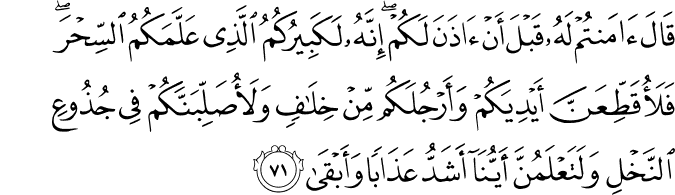
And know that from the linguistic uses of the word “في:in” is “على:on or upon” as Allah Subhaana Huwa Ta’alaa said in the 20th chapter in the 71st verse of the Qur’an:

“(Pharaoh) said: “Believe you in Him before I give you permission? Surely this must be your leader, who has taught you magic! be sure I will cut off your hands and feet on opposite sides, and I will have you crucified on(In Arabic the word is في) trunks of palm-trees: so shall you know for certain, which of us can give the more severe and the more lasting punishment!”

This is just a short post in response to the terrible beliefs in regards to hating those who say that which Allah said about Himself, in that he Allah is above the sky, in a way that befits His Majesty.

by Yahya Trento