Concise Commentary on the Book of Tawhid

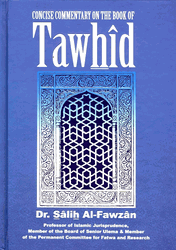
Concise Commentary on the Book of Tawhid

Concise Commentary on the Book of Tawhid ash-Shaykh Dr. Salih bin Fauzan al Fawzan


Download

(Right click then save target as)

This book gives a clear explanation of the Muslim sound Creed which is the core of the religion of Islam, as the belief in Tawhid (monotheism) is the purpose for which Allah created both mankind and jinn, and thus, those whose belief in Tawhid is corrupt, are not considered Muslims. It is a commentary on the Book of Tawhid written by Sheikh Muhammad Ibn Abdul Wahhab.

In this book, Dr. Salih al Fawzan has projected light on doctrinal issues of utmost importance in a genuine and reader-friendly style. This translated version of the book fulfills a long-standing need on the part of English-speaking Muslims for a brief, introductory book in Tawhid. It is a valuable book for novice readers, be they Muslims or non-Muslims, who do not have thorough knowledge of the sound creed, The chapters of this book focus on major issues in Tawhid such as the definition of Tawhid, virtue of Tawhid, warning against acts of shirk (polytheism), the Prophet’s Maintenance of monotheism, and other topics.

Dr. Salih al Fawzan (born in 1935) has obtained a PhD in Islamic jurisprudence and has a high profile in teaching jurisprudence. He is a member of many academic institutions including the Board of Senior Ulema, the Permanent Committee for Fatwa and Research. He has written more than sixty published works covering Muslim Creed, Islamic jurisprudence and Muslim’s conduct.

The Exquisite Pearl

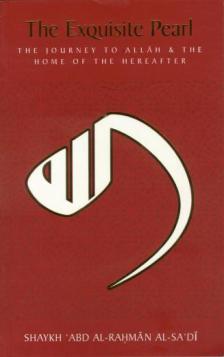
The Exquisite Pearl

The Exquisite Pearl by Sheikh Abd al-Rahman al-Sa'dee


Download

(Right click then save target as)

The Exquisite Pearl by Shaikh Abdulr-Rahman al-Sa’dee
The Journey to Allah and the Home of the Hereafter . Of all the faculties man has been endowed with, none excels the heart in importance and nobility. For the heart is both the seat of intelligence and understanding, and the locus of faith and spirituality; it is the quintessential faculty by which man may come to know his creator, and seek nearness and intimacy with Him. The heart’s spiritual sustenance lie sin its being receptive to the effusions of divine grace and guidance, without which the veils that cover it will continue to corrupt its primordial purity, gradually rendering it dysfunctional! Each veil- a metaphor for heedlessness, sins and distraction- that is melted away by the rays of faith and spiritual endeavour, allows vital qualities such as love of Allah, as well as hope, fear, remembrance, and reliance upon Him, are referred to in the religious vocabulary as spiritual stations; only when the heart embraces these stations is it said to be truly sound. The Majestic Qur’an informs:

‘The day when wealth and sons avail not, save him who brings to Allah a heart that is sound.’

This book explains the main spiritual stations that the heart is required to embrace as part of its worship of Allah and its journeying to Him. The book is based on a poem written by the author and his explanation of it.

Condemning the Practice of those who claim Sufism

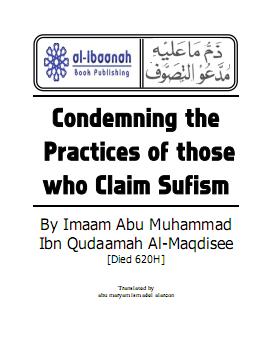
Condemning the Practice of those who claim Sufism by Imaam Abu Muhammad Ibn Qudaamah al-Maqdisee


Download

(Right click then save target as)

Condemning the Practice of those who claim Sufism
by Imaam Abu Muhammad Ibn Qudaamah al-Maqdisee
Translated by Abu Maryam Isma’eel Alarcon

It is reported that Abu Bakr al-Athram said: “I heard Abu Abdillaah (Ahmad bin Hanbal) say: “Taghbeer is innovated.””

Abul-Harith said: “I asked Abu Abdillaah about Taghbeer, saying to him: “The hearts become softened by it. So he responded “It is an innovation (bid’ah)”

Al-Hasan bin Abdil-Azeez al-Jarwee said: “I heard ash-Shafi’e, Muhammad bin Idrees say: “I left behind something in Iraq called Taghbeerm which the heretics introduced to divert the people away from the Qur’aan””

الدار الآخرة

الدار الآخرة
للشيخ عمر عبد الكافي


Part 01 | Part 02 | Part 03 | Part 04 | Part 05 | Part 06
Part 07 | Part 08 | Part 09 | Part 10 | Part 11 | Part 12
Part 13 | Part 14 | Part 15 | Part 16 | Part 17 | Part 18
Part 19 | Part 20 | Part 21 | Part 22 | Part 23 | Part 24
Part 25 | Part 26 | Part 27 | Part 28 | Part 29 | Part 30
Part 31 | Part 32 | Part 33
(Right click then save target as)

سلسلة من 33 شريطا عن الدار الآخرة تبدأ من الموت وتنتهي بالجنة أو النار .. حققت هذه السلسلة انتشارا واسعا في مختلف دول العالم وكانت سببا في هداية الكثير من المسلمين وتوبتهم إلى الله.

Tape 01 مقدمة في الدار الآخرة
Tape 02 فضل الروح وماذا في القبور
Tape 03 ماذا بعد الموت ؟
Tape 04 موجبات عذاب القبر
Tape 05 منجيات عذاب القبر
Tape 06 بداية علامات الساعة الصغرى
Tape 07 علامات الساعة الصغرى
Tape 08 علامات الساعة الكبرى
Tape 09 البعث من القبور والحشر
Tape 10 ما هي أسماء يوم القيامة ؟
Tape 11 الحساب
Tape 12 تابع الحساب
Tape 13 الميزان
Tape 14 الشفاعة
Tape 15 الصراط
Tape 16 ماذا يحدث عند الحوض ؟
Tape 17 الجنة والنار
Tape 18 وصف النار
Tape 19 تابع وصف النار
Tape 20 عذاب النار
Tape 21 عذاب النار وهول جهنم
Tape 22 مفاتيح الجنة
Tape 23 وصف الجنة
Tape 24 أسباب دخول الجنة
Tape 25 الحديث عن الجنة
Tape 26 وصف الجنة
Tape 27 صفات أهل الجنة
Tape 28 الجنة وعباد الرحمن
Tape 29 تابع الجنة وعباد الرحمن
Tape 30 الجنة ومؤمن آل محمد
Tape 31 أول من يدخل الجنة
Tape 32 الجنة وآخر منازلها
Tape 33 رضا الله سبحانه والنظر لوجهه الكريم

www.AbdelKafy.com/ar
www.IslamWay.com

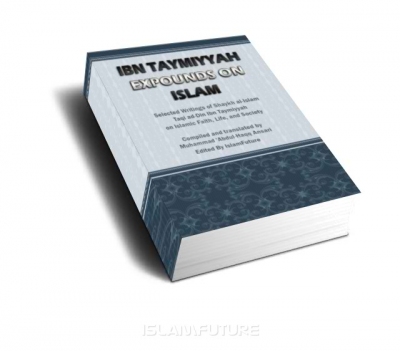
Ibn Taymiyyah Expounds On Islaam


Download

(Right click then save target as)

This is the english book “Ibn Tamiyyah Expounds on Islam” – A book of various fataawaa on Islamic faith, life and society. Translated by Muhammad Abdul Haqq Ansari and printed by The Institute of Islamic and Arabic Sciences in America (IIASA).

IslamFuture.com

Shia And Shiasm, Their Genesis And Evolution

Shia And Shiasm, Their Genesis And Evolution by Shaykh Ehsan Elahi Zaheer


Download

(Right click then save target as)

Shia And Shiasm, Their Genesis And Evolution by Shaykh Ehsan Elahi Zaheer rahimaullaah

The Characteristics Of Prophet Muhammed (peace be upon him)

The Characteristics Of Prophet Muhammed (peace be upon him)


Download

(Right click then save target as)

Prophet Muhammad (peace and blessings be upon him) is the best role model for all humankind. Among his outstanding virtues and characteristics, he was an extraordinary husband, a perfect father, and a unique grandfather. He was also a great statesman, judge, and spiritual leader. His most distinctive quality, however, was the fact that he was a blessing to all in both word and deed. He infused justice, love, and dignity in all those around him. He spread the power of brotherhood to the extent that it became exceptional in human history. Affirming that these grand virtues were bestowed on him by Allah the Almighty and that He prepared His loyal messenger to call for the true religion, is part of one’s belief. The Qur’an describes the Prophet (peace and blessings be upon him) as merciful and kind to the believers. Allah the Almighty says, {Now hath come unto you a Messenger from amongst yourselves: it grieves him that ye should perish: ardently anxious is he over you: to the Believers is he most kind and merciful.) (At-Tawbah 9:128)

Madeenah.com Responds To The Unfounded Accusations

Madeenah.com Responds To The Unfounded Accusations from salafi publication spubs


Download

(Right click then save target as)

Uncovering the Absurdities behind the Claim of ‘Attacking the Salafees
Regrettably, it appears that our silence has only served to embolden those making these unjust accusations, as they have misinterpreted our patience as acceptance, and deceitfully presented their false accusations as fact, using this method and other disgraceful intimidation tactics to discourage others from benefiting from the translated works of our scholars, and six years of patience, as most would agree, is more than sufficient.

Traps of Iblees

It is not possible to encompass one of Iblees’ evils, let alone all of them. Since Iblees’ evil is of six types, Iblees remains behind the son of Adam until he gets him to do one or more of these six evils.
One

THE FIRST EVIL IS THE EVIL OF KUFR AND SHIRK and enmity to Allaah (SWT) and His Messenger (sallallaahu ‘alaihi wa sallam). If he gains this from the son of Adam, his moaning is eased, and he rests from his ordeal with this man. Further, this is the first thing Iblees wants from the worshipper (al-‘Abd). If Iblees gains this, he makes this person part of his army, one of his soldiers, and he appoints him as a deputy or agent against other human beings. Then, this person becomes one of the deputies or callers of Iblees.

Two

If he despairs of enticing him with the first evil, and if this person is one of those for whom it was written that he would be a Muslim in his mother’s womb, Iblees tries:

the SECOND CLASS OF EVIL. THIS IS BID’AH (innovation). Iblees loves Bid’ah more than debauchery and disobedience because the harm of Bid’ah is in the essence of the religion. Moreover, it is an unrepentable sin and is against the call of the messengers and is a call to a message different from the one conveyed by Ar-Rasool. Bid’ah is a gate to Kufr and Shirk. Therefore, if Iblees gains the performance of Bid’ah from a person and makes him one of the people of Bid’ah, he also becomes one of his agents and a caller of his.

Three

If Iblees fails and is unable to trap Al-‘Abd at this class, and if he is one of those who were granted by Allaah (SWT) the gift of As-Sunnah and hatred of the people of Bid’ah and error, he proceeds to:
the THIRD CLASS OF EVIL, which is the class of MAJOR SINS in their various forms.
Iblees is very covetous of letting a person fall into major sin, especially if he is a scholar who is followed. Iblees is covetous of that, so that he may repel people from him and spread his sins and disobedience amongst the people. He uses some people as his agents to spread this person’s sins under the false pretence that this will help them to get closer to Allaah. But in fact this person is the deputy of Iblees without knowing it. For those who would like abomination to be spread amongst the believers there is a great torment in this life and in the Hereafter especially if they take charge of spreading about enormities, not out of advice, but by obeying Iblees and being his agent. All this is to repel people from the Scholar and from his benefit.

Four

If Iblees is unable to snare Al-‘Abd at this degree he moves him to:
the FOURTH CLASS, or the MINOR SINS. These sins may ruin a person if they accumulate. That is why Ar-Rasool (sallallaahu ‘alaihi wa sallam) said, Be aware of the minor sins, because the simile of the minor sin is like the people who went to a desert. Then he (sallallaahu ‘alaihi wa sallam) mentioned a Hadeeth the meaning of which is that every one of them brought a stick of wood until they had kindled a huge fire (just as the minor sins add up little by little until they become a major sin). The person continues taking the matter of minor sins easily until he considers them inconsequential. Therefore, a person who commits major sins but fears their effect is in a better condition than he is.

Five

If the Al-‘Abd has prevented Iblees from trapping him at this level, he moves him to the fifth level:
The FIFTH LEVEL IS TO OCCUPY HIM WITH PERMISSIBLE THINGS that do not gain him reward or punishment. However, the punishment of this level is caused by passing the reward missed by being occupied with these deeds.

Six

If Al-‘Abd has kept Iblees from succeeding at this level, and if he is careful about his time, being covetous with it, knows the value of moments, and knows the value of what comes of comfort or torment, Iblees transfers him to the sixth level:

The SIXTH CLASS is to OCCUPY HIM WITH DEEDS OF LESSER REWARD to keep virtue away from him and to prevent him from attaining the reward of the favoured deed.
Therefore, he orders him to do a good action with less reward if that includes leaving a better action. Very few people are aware of this. Because if a person feels a strong urge to some kind of obedience, he does not doubt that it is true obedience and that he is getting closer to Allaah (SWT).. He never thinks that this call is from Iblees because he believes that Iblees never calls one to do good. Therefore, he thinks that this call is from Allaah (SWT).. Actually he is excused because he never knew that Iblees would call one to seventy doors of good deeds either to get him to one door of evil or to let a better deed than these seventy deeds pass away from him.

This cannot be known except by a light from Allaah (SWT),, a light he instils in the heart of Al-‘Abd. The source of this type of knowledge is following the way of Ar-Rasool (sallallaahu ‘alaihi wa sallam) and taking care of the levels of deeds with Allaah (SWT),, the deeds of His favoured ones, the deeds more pleasing to Him, and those more beneficial to Al-‘Abd, and deeds that have more Naseehah (guidance) from Allaah (SWT),, His Rasool, His Book, and His believing worshippers. No one has this type of knowledge except the inheritors of Ar-Rasool (sallallaahu ‘alaihi wa sallam), his deputies in the Ummah, and his successors on earth. In addition, most of the creation is screened from this. This call does not come to their hearts. Allaah (SWT) gives His favour to whomever He wills from among His worshippers.

Seven

If Al-‘Abd prevents Iblees from trapping him at any of these six levels, and if it becomes difficult for Iblees, he empowers his party of jinn and human beings with different kinds of harm:

IMPUTING DISBELIEF TO HIM, CALLING HIM MISGUIDED AND AN INNOVATOR, WARNING PEOPLE AGAINST HIM, and intending to weaken him and to disturb his heart. Iblees, by using this method, tries to confuse this person’s thinking and tries to PREVENT PEOPLE FROM BENEFITING FROM HIM. Therefore Iblees expends his utmost effort to empower the defenders of falsehood, from human beings and from jinn, against him. Then the believer is at war until death. Whenever he gives up, he is hurt or is taken captive. Hence the believer is in Jihad until he meets with Allaah (SWT)..