Download
(Right click then save target as)
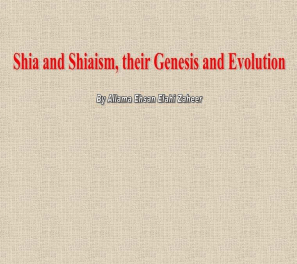
Shia And Shiasm, Their Genesis And Evolution by Shaykh Ehsan Elahi Zaheer rahimaullaah
Download
(Right click then save target as)
Shia And Shiasm, Their Genesis And Evolution by Shaykh Ehsan Elahi Zaheer rahimaullaah
Download
(Right click then save target as)
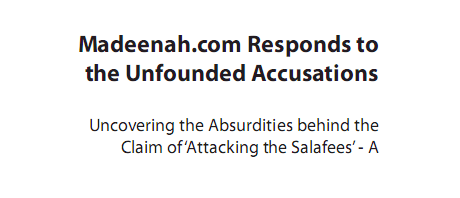
Uncovering the Absurdities behind the Claim of ‘Attacking the Salafees
Regrettably, it appears that our silence has only served to embolden those making these unjust accusations, as they have misinterpreted our patience as acceptance, and deceitfully presented their false accusations as fact, using this method and other disgraceful intimidation tactics to discourage others from benefiting from the translated works of our scholars, and six years of patience, as most would agree, is more than sufficient.

Download
(Right click then save target as)
by Muhammad Sa’eed Raslan
The Islamic knowledge is the legacy of a prophet, the scholars are heirs of the prophets, and this is why the Knowledge seekers were among the best people.
Download
(Right click then save target as)
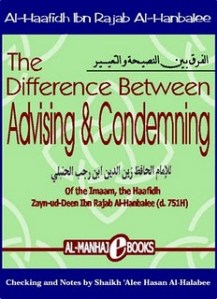
In this classical treatise, Ibn Rajab (may Allah have mercy on him) discusses the differences between advising and condemning, which is an extremely important topic since it is very common that the two are confused for one another. For the most part, his talk revolves around the dealings and affairs of the scholars, and how it was from their way to advise and accept the truth from one another. And he shows how condemning was not from their characteristics, but rather from the signs of the evil and wicked people who held hidden goals and objectives.This book is especially important in these days due to the wide scale confusion that exists on this subject amongst the Muslims. So today when we find scholars of the Sunnah refuting weak opinions of other scholars from the past, they are quickly accused of hating those scholars of the past and just condemning them, when in fact they are really advising the ummah and warning the Muslims against following a man in his error. So, we hope that these matters become clear to the reader upon studying this treatise and that he is able to distinguish those who are truly advising from those who are just condemning.
Question: To what degree is a Muslim to be concerned with politics today, within it’s Islaamic guidelines?
Answer: If what is intended by “politics” is the administering of the ummah, then the reality is that politics is not from the acts of one individual from the people of the ummah, but rather, it is from the duties of the Muslim State. This is if the objective behind politics, as we stated before, is the administering of the ummah and the managing of its concerns in order to rectify what is in it from its
religious and worldly affairs. So if this is what is intended by “politics”, then this is fard kifaayah (a collective obligation). However, it is not for those people who are not in control of the state or of the rule, nor for those who can neither produce benefit nor cause harm.
As for obtaining the news to be aware of the state of affairs and the weakness the Muslims are in, and in order to avoid this outcome, then as we say, this is from the tasfiyah (purification) and the tarbiyah
(educating) – purifying Islaam from what has entered into it and focusing on educating the Muslims and bringing them up on this purified Islam. So knowing these general circumstances, which encompass the Muslims, is a must for the matter is as the old Arab poet has stated, taking his meaning
from an authentic hadeeth:
“I learned evil not for the sake of evil, but to avoid it
And whoever doesn’t know good from evil, he will fall into it.”
This is derived from a hadeeth – and I mean by it, the hadeeth of Hudhaifah Ibn Al-Yamaan, radyAllaahu ‘anhumaa, which is reported in the Saheehs of Al-Bukhaaree and Muslim. He, radyAllaahu ‘anhumaa, said: “The people used to ask Allaah’s Messenger صلى الله عليه وسلم, about the good, but I used to ask him about the evil for fear of it reaching me.” So being aware of what the Muslims are upon from humiliation and weakness in order to turn them away from that towards using the means of knowledge, strength and power, this is an obligation from the many obligations.
As for engaging at length in obtaining news, knowledge of battles and western politics, then this is from the aspect of: “Knowledge of something is better than being ignorant of it.” This is something
that we do not forsake. However, at the same time, we must not be very enthusiastic and fanatica about it. This is since the Prophet صلى الله عليه وسلم did not establish the affair of his Companions on knowing and following precisely, the news of his enemies to the same extent as he صلى الله عليه وسلم used to focus on teaching his Companions from one perspective and cultivating them on Allaah’s command from another perspective. This is our belief concerning politics based on their two categories, which we have mentioned previously.
[Al-Asaalah, Issue #18]
Download
(Right click then save target as)
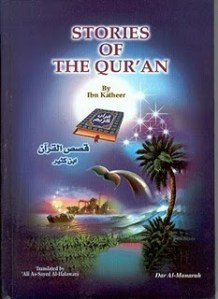
Here we are with the book Stories of the Qur’an by AI-Hafiz Isma` il Ibn Katheer Ad- Dimashqi (May Allah rest his soul), taking a tour throughout the stories mentioned in the Glorious Qur’ an pertaining to which Allah the Almighty says: {Indeed in their stories, there is a lesson for men of understanding}. (Yusuf, 111) Yes, in order to find admonition, lessons and exemplary models! This book handles the stories that are cited in the Glorious Qur’an, gathered from the book titled, Al-Bidayah wan-Nihayah (The Beginning and the End).
Download
(Right click then save target as)
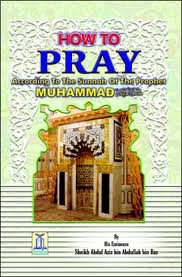
The Description Of The Prophet’s Prayer
Abdul-Azeez bin Abdullah bin Baaz
This is a brief booklet which describes the Prophet (صلى الله عليه وسلم) prayer and is presented to all Muslims so that they may strive hard to imitate him when performing their Prayers, for he (صلى الله عليه وسلم) said: “Perform your Prayers as you have seen me performing them” (Reported by Sahih Al Bukhari)

Download
(Right click then save target as)
Shaykh Abdur-Rahman bin Naasir al-Sa’di
A brief explanation of some of the Names of Allah
Download
(Right click then save target as)
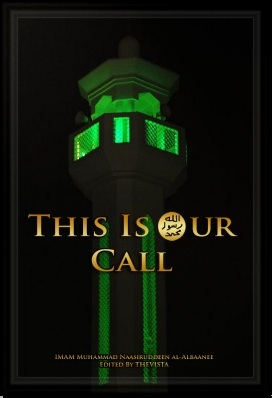
This is a translated transcription of a lecture delivered by Imaam Al- Albaanee (rahimahullaah) that was recorded and distributed under the title “Hadhihi Da’watunaa” (This is Our Call). The present translation was translated directly from the Arabic audio. In this lecture, Imaam Al-Albaanee explains the basis of the Salafee Manhaj, which is following the way, understanding and practical application of the Salaf, who were namely the first three generations of Muslims: The Sahaabah, Taabi’een and Atbaa’ at-Taabi’een. They are the ones referred to in the Prophet’s saying: “The best of mankind is my generation, then those that come after them, then those that come after them.” This is the basis that distinguishes the true call to Islaam from all other false and erroneous calls, regardless if they claim to be “upon the Qur’aan and the Sunnah.” Al- Albaanee goes into depth discussing this fact, that one cannot truly understand and apply the Qur’aan and Sunnah unless he follows the understanding and application of the Salaf. We ask Allaah to accept this effort and benefit the Muslims with it.
 AsbaulHadeeth.com